Skip to content
Running out of hot water in the middle of a shower is frustrating but so is spending thousands on a system you don’t actually need. . That’s the real trade-off when choosing between a traditional and tankless water heater.
Traditional water heaters are simple and affordable, but they come with limits. Tankless systems promise endless hot water and better efficiency but only if your home can support them. So which one actually makes more sense for your situation?
Here’s a clear breakdown of how these systems compare in cost, performance, and long-term value.
What Are the Key Differences Between Tankless and Traditional Water Heaters?
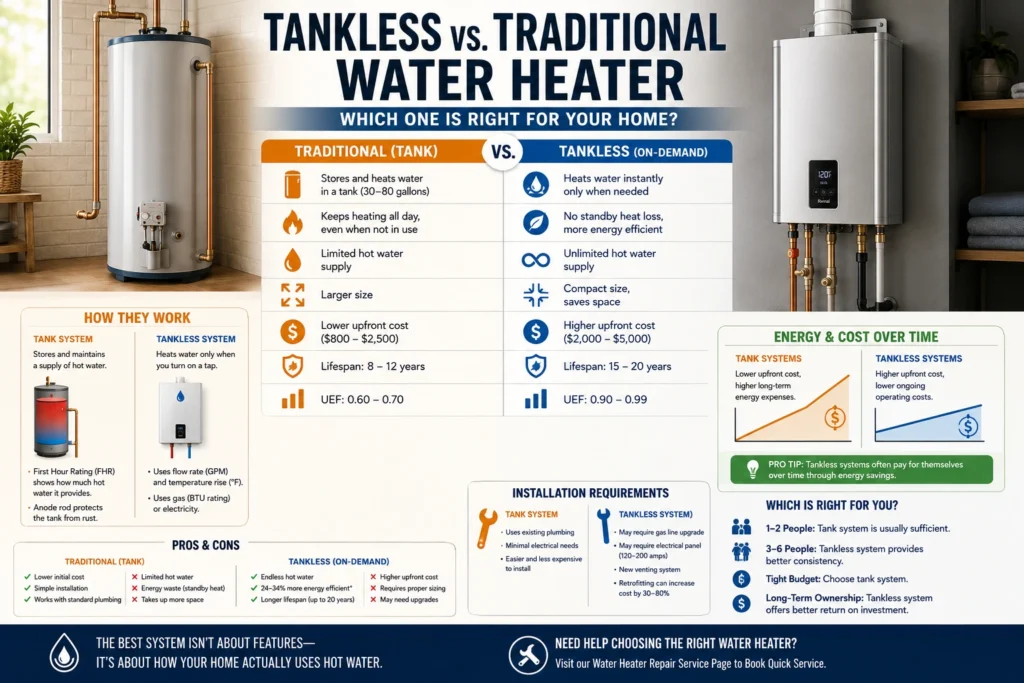
Traditional water heaters store and maintain a supply of hot water.
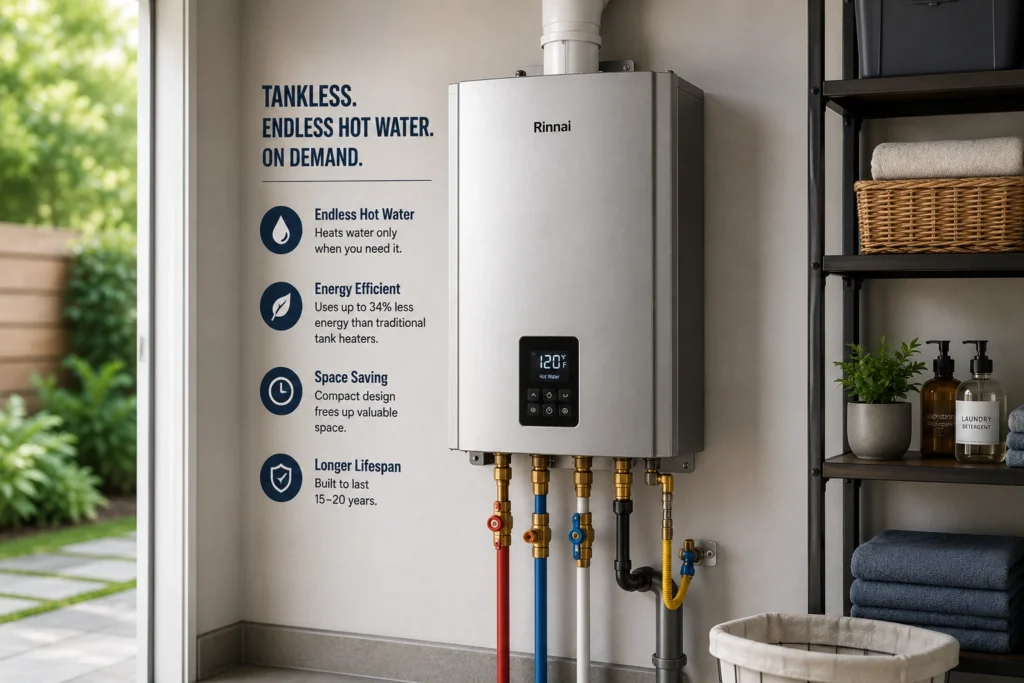
Tankless systems heat water instantly, only when you turn on a tap.
| Feature | Traditional Water Heater | Tankless Water Heater |
| Cost | Lower ($800–$2,500) | Higher ($2,000–$5,000) |
| Lifespan | 8–12 years | 15–20 years |
| Efficiency (UEF) | 0.60–0.70 | 0.90–0.99 |
| Hot Water | Limited | Unlimited |
| Space | Large tank | Small unit |
UEF (Uniform Energy Factor) shows energy efficiency. Higher UEF means less energy use.
Next, learn how tank systems work.
How Does a Tank Water Heater Work?
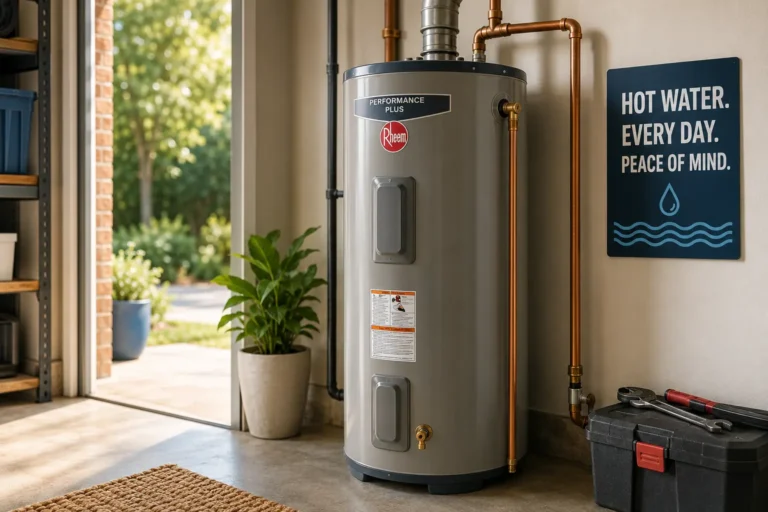
A tank heater stores 30–80 gallons of hot water. It keeps heating water all day.
Key facts:
- Stores water → ready to use
- Uses energy → even when idle
- Has First Hour Rating (FHR) → shows how much hot water it gives in one hour
Important part:
- Anode rod protects the tank from rust
- Sediment buildup lowers efficiency over time
Best for: Small homes (1–3 people)
Next, see how tankless systems work.
How Does a Tankless Water Heater Work?
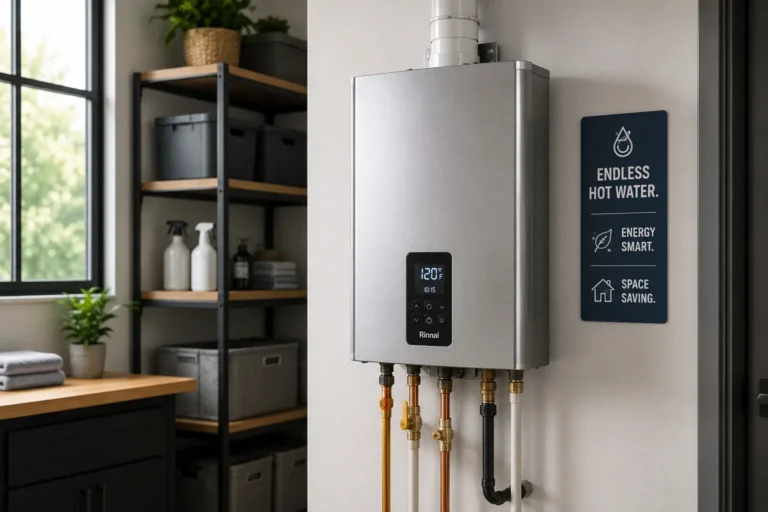
A tankless heater heats water only when you turn on a tap.
Key facts:
- Uses flow rate (GPM) to measure output
- Depends on temperature rise (°F)
- Uses gas (BTU rating) or electricity
Types:
- Condensing tankless → higher efficiency
- Non-condensing → lower cost
Example:
A 5 GPM unit runs 2 showers at once.
Next, compare pros and cons.
What Are the Pros and Cons of Traditional Water Heaters?
Advantages
- Reduces installation complexity
- Lowers initial investment
- Uses standard plumbing connections
Disadvantages
- Limits hot water volume
- Increases energy waste via standby heat
- Occupies floor space
Next, review tankless system trade-offs.
What Are the Pros and Cons of Tankless Water Heaters ?
Advantages
- Delivers continuous hot water
- Reduces energy consumption by 24–34% (DOE estimate)
- Extends lifespan up to 20 years
Disadvantages
- Increases upfront cost
- Requires precise sizing
- Demands electrical or gas upgrades
Next, analyze cost differences beyond purchase price.
What Is the Real Cost Difference Over Time?
Tank systems cost less initially but increase lifetime energy spending. Tankless systems cost more upfront but reduce operating expenses.
Cost structure:
- Tank systems: lower upfront cost, higher long-term energy expenses
- Tankless systems: higher upfront cost, lower ongoing operating costs
Maintenance factor:
- Hard water → scaling risk
- Tankless → requires annual descaling
Pro Tip
Tankless systems often pay for themselves over time through energy savings.
Next, review installation constraints.
What Installation Requirements Differ Between Systems?
Tank heaters install with minimal upgrades. Tankless systems often require infrastructure changes.
Tank installation:
- Uses existing plumbing
- Requires limited electrical load
Tankless installation:
- Upgrades gas lines (BTU increase)
- Upgrades electrical panels (120–200 amps)
- Installs new venting systems
Retrofitting increases cost by 30–80% in older homes.
Next, explore real-world performance issues.
What Common Problems Happen in Real Usage?
Performance differences become obvious during everyday use.
- Tank systems: run out of hot water during back-to-back showers, especially in larger households
- Tankless systems: can struggle when multiple fixtures run at once (for example, two showers and a dishwasher)
- Some tankless users notice a brief temperature fluctuation known as the “cold water sandwich”
In both cases, performance depends heavily on proper sizing and installation.
Next, compare energy sources.
How Do Electric and Gas Models Compare?
Electric systems simplify installation. Gas systems increase heating power.
Electric units:
- Reduce upfront cost
- Require panel capacity
- Deliver lower flow rates
Gas units:
- Increase heating speed
- Support high demand
- Require venting systems
Next, determine which system fits your scenario.
Which Water Heater Fits Your Home ?
The right choice depends on how your household actually uses hot water:
- 1–2 people: a tank system is usually sufficient and more cost-effective
- 3–6 people: a tankless system provides better consistency during peak use
- Tight budget: tank systems reduce upfront cost
- Long-term ownership: tankless systems offer better return on investment
Next, evaluate value perception.

Is a Tankless Water Heater Worth the Investment?
Tankless systems provide value when usage is high and ownership duration exceeds 5–7 years. Energy savings offset higher upfront cost over time.
Short-term ownership favors tank systems due to lower initial investment.
Next, answer direct user queries.
Final Thoughts
Both systems work well—but they solve different problems.
- Choose a Traditional water heater if you want simplicity, lower upfront cost, and reliable performance
- Choose a Tankless system if you want long-term efficiency, a longer lifespan, and consistent hot water on demand
If you’re planning to stay in your home for years, tankless often delivers better value. If you need something affordable and straightforward now, a traditional system is the practical choice.
The best system isn’t about features it’s about how your home actually uses hot water.
FAQs About Tankless vs traditional water heater
1. Which water heater performs better?
Tankless systems perform better in efficiency and supply continuity. Traditional systems perform better in upfront affordability.
2. Do tankless heaters reduce energy bills?
Yes. Tankless heaters reduce energy consumption by up to 30% due to on-demand heating.
3.How long does each system last?
Tank heaters last 8–12 years. Tankless systems last 15–20 years with maintenance.
4. Can tankless systems run out of hot water?
No. They deliver continuous flow but reduce temperature when demand exceeds flow rate.
5. Why does a traditional heater run out quickly?
The tank empties after stored volume is used and requires reheating time.
6. Are tankless systems suitable for large families?
Yes. Properly sized systems support multiple fixtures simultaneously.
7. What are the disadvantages of tankless water heaters?
Tankless systems have higher installation costs and may need upgrades. Some users notice a short delay before hot water starts.
8. Why is tankless installation expensive?
It requires upgrades to gas lines, electrical systems, and venting.
Need Help Choosing the Right Water Heater?
A professional inspection helps you choose the right system for your home. Proper installation ensures better performance and long-term savings. Visit our Water Heater Repair Service Page to Book quick Service.