Skip to content
You probably never think about your water heater until the morning you step into a cold shower and stand there in shock, wondering what just happened. That appliance sitting quietly in your utility room, basement, or garage has been doing its job every single day without so much as a thank you. And like everything in your home, it has a shelf life.
So how long does a water heater actually last? The honest answer is: it depends. But that is not the whole story, and if you are reading this, you deserve more than a shrug. Whether your unit is humming along at year 7 or you just bought a new home and have no idea how old the water heater is, this guide will walk you through everything you need to know, from realistic lifespan numbers to the warning signs that something is quietly going wrong.
The Average Water Heater Lifespan: What the Numbers Actually Mean
Most water heaters last between 6 and 15 years, with an average lifespan of about 11 years. However, factors like the type of water heater you have, your home’s water quality and usage, and maintenance can all impact how long it lasts.
That range is wide, and that is intentional. A water heater in a single person’s apartment with soft municipal water and annual professional maintenance will outlast the same model in a large family home with hard well water that has never been flushed. Same appliance, completely different story.
Here is the breakdown by type:
Conventional Tank Water Heaters
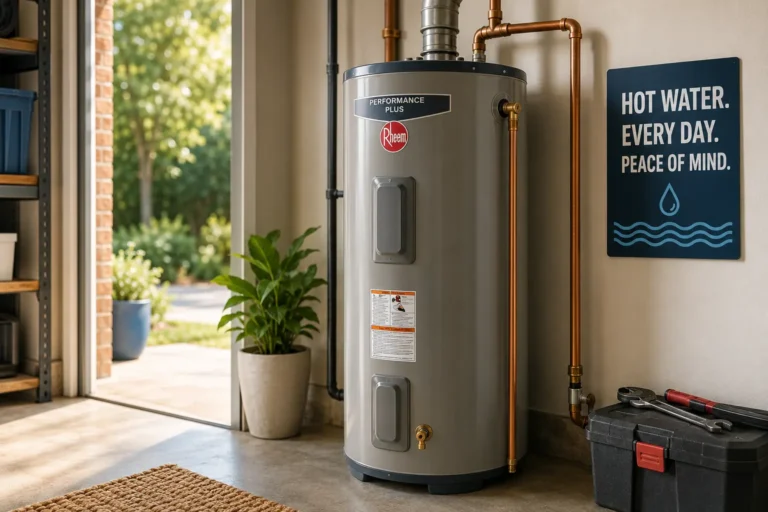
Traditional tank water heaters typically last 8 to 12 years. These systems continuously heat and store water, putting ongoing stress on internal components. That constant heating and reheating cycle is the core reason tank heaters wear out faster than their tankless counterparts.
Tankless (On-Demand) Water Heaters
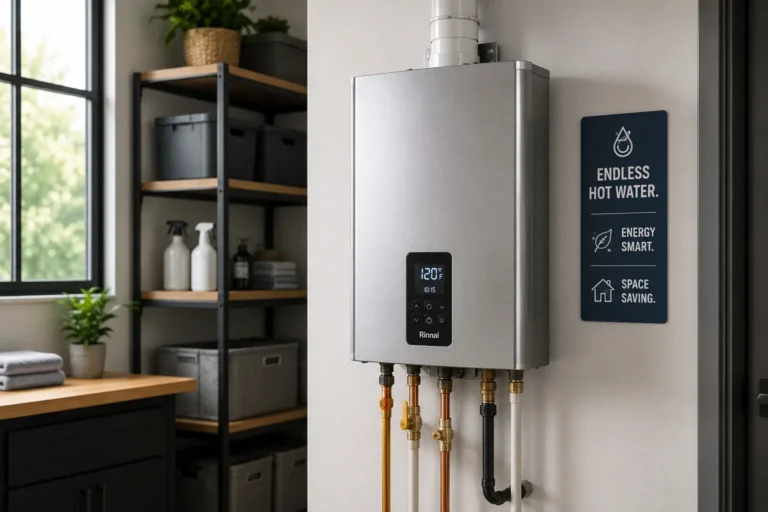
Tankless water heaters typically last 15 to 20 years with proper care, nearly double the lifespan of traditional tank water heaters. Tankless units avoid the sediment buildup and corrosion that shorten tank lifespans because they do not store water, and on-demand heating reduces wear from constant reheating cycles.
Gas vs Electric Tank Water Heaters
There is also a difference between fuel types. With regular inspection, draining, and flushing, you can expect a gas water heater to last anywhere from 8 to 12 years, and an electric water heater to last anywhere from 10 to 15 years. Electric models tend to run a little longer because they do not deal with combustion byproducts and the associated wear on components like burners and exhaust systems.
Heat Pump Water Heaters
Heat pump units usually see 10 to 15 years of service. They are more energy efficient than standard electric tank models, though they have more mechanical complexity, which can affect maintenance needs over time.
Why Does My Water Heater Age Faster Than My Neighbor’s?
This is one of the most common questions homeowners ask, and the answer comes down to a handful of variables that most people never consider until there is a problem.
Water Quality and Hardness
Hard water is probably the single biggest threat to a water heater’s lifespan. Water with high concentrations of calcium and magnesium leaves behind mineral deposits that accumulate at the bottom of your tank. Over time, that sediment layer acts as insulation between the burner and the water, forcing the heater to run longer and hotter to do the same job. In electric water heaters, these minerals collect on the heating elements and reduce their efficiency. Sediment and corrosion problems develop slowly, and it may take years for water heater performance to suffer.
Household Demand
Larger families place a higher demand on water heaters, which can shorten their lifespan. A unit that is recovering and reheating constantly is under far more stress than one that gets moderate daily use. If you bought your home as a couple and now have three teenagers, your original water heater may be working twice as hard as it was designed to.
Installation Quality
Poor installation can cause immediate and long-term problems, which is why it is always better to go with professional installation. An improperly sized unit, incorrect pressure settings, or a venting issue on a gas heater can shave years off its lifespan quietly, without any obvious symptoms until something major fails.
Maintenance History (or Lack Thereof)
This is the big one. A water heater that has been flushed annually and had its anode rod inspected every few years will genuinely outlast an identical unit that was installed and never touched. Energy.gov provides data stating the lifespan of a water heater is significantly longer with regular maintenance.
The Anode Rod: The Unsung Hero Inside Your Tank
If you have never heard of an anode rod, you are not alone. Most homeowners have no idea it exists until a plumber mentions it during a service call. Understanding what it does is one of the most important things you can learn about your water heater.
An anode rod is a long metal rod, generally made of magnesium or aluminum. Its purpose is to attract iron, limestone, and other minerals in the water that would otherwise rust the inside of the water heater’s steel tank. Instead, the anode rod gradually corrodes in place of the steel tank, extending the water heater’s lifespan.
Think of it as a bodyguard that sacrifices itself so your tank does not have to. Once the rod is fully depleted, the corrosive elements in the water turn their attention to the steel tank walls.
By regularly replacing the anode rod, you can extend how long your water heater lasts by up to nearly 10 years. In most cases, owners will need an anode rod replacement only about once every 3 to 5 years.
How long an anode rod will last depends on what chemicals are in the water, how much hot water is used, and whether or not a water softener is installed. If you have a water softener, your anode rod actually depletes faster because soft water is slightly more aggressive toward metals, so check it more frequently.
Warning Signs Your Water Heater Is Reaching the End
Water heaters rarely fail without giving you some advance notice. The problem is that most homeowners do not know what to look for. Here are the signs that should prompt you to pick up the phone and call a plumber.
The Unit Is Over 10 Years Old
Age alone is not a death sentence, but it is the most reliable signal that you are in the warning zone. Most conventional tank water heaters begin to decline in performance after 8 years, and by 10 to 12 years, they are often operating inefficiently or at risk of failure. You can check the age of your unit by looking at the serial number on the manufacturer’s label. Most manufacturers encode the installation or manufacture date in the first few characters of the serial number, though the format varies by brand.
Rusty or Discolored Hot Water
Rust-colored water flowing only from the hot tap is a classic warning of tank corrosion. Over time, the protective anode rod inside the water heater gets used up. Once it is gone, the steel walls of the tank start rusting. While replacing the anode rod early in the heater’s life may extend its lifespan, consistent rust in the water is usually the point of no return.
One quick test: fill three or four gallons of water from the hot tap into a bucket. If it comes out brown or has a metallic smell, the problem is almost certainly inside the tank.
Rumbling, Popping, or Banging Sounds
This is one of the most overlooked warning signs. Sediment buildup inside the tank is a natural byproduct of heating hard water. Over time, this sediment hardens and forms a thick layer at the bottom of the tank, which can cause popping, cracking, or rumbling sounds as water is heated. These noises not only indicate inefficient operation but also accelerate wear and tear.
If your water heater sounds like it is making popcorn, that hardened sediment is being superheated. It is not dangerous by itself, but it means the unit is working significantly harder than it should.
Water Pooling Around the Base
Water pooling at the base of your water heater usually indicates a crack in the tank caused by years of heating and cooling cycles. These tiny fractures can expand over time, eventually resulting in a major leak and potential water damage. Even if the leak appears minor, it is usually a sign that the inner tank is compromised and the unit needs to be replaced.
Before you panic, check the connections and fittings first. Sometimes the pooling comes from a loose fitting on the inlet or outlet pipe, which is a simple fix. But if the water appears to be seeping from the tank body itself, replacement is the only real answer.
Inconsistent or Insufficient Hot Water
A sudden drop in the amount of hot water your water heater produces is a clear sign that something is amiss. If you are frequently finding yourself running out of hot water in the shower or while doing the dishes, your water heater may be reaching its end. Insufficient hot water supply can be caused by a range of issues, including sediment buildup, a malfunctioning thermostat, or a failing heating element. These problems often become more severe as the water heater ages.
Rising Energy Bills
One of the earliest signs of a failing water heater is a gradual increase in your energy or gas bills. When a heater struggles to perform efficiently, it uses more energy to deliver the same amount of hot water. If your usage habits have not changed but your bills have, your water heater may be working overtime to compensate for worn components or sediment buildup inside the tank.
This is a slow-burn symptom that most homeowners attribute to rate increases or seasonal changes. Pull out your last 12 months of utility bills and compare them to the same months two years ago. A steady upward trend is telling.
Pressure Relief Valve Issues
Your temperature and pressure relief valve (T&P valve) is a safety device that releases pressure if the tank overheats or pressure builds too high. The T&P relief valve should be inspected once a year by the consumer and every 5 years by a professional. If the valve is leaking consistently or has been triggered repeatedly, it means the system is regularly hitting unsafe pressure levels. That is a serious sign.
Frequent Repairs
When repairs start feeling like a routine, it is a strong indication the system is reaching the end of its functional life. There is a useful rule of thumb that applies here, sometimes called the 50% rule. If the repair cost is more than 50% of the price of a new unit, replacement is typically the better investment.
How to Find Your Water Heater’s Age (Even Without the Manual)
Most homeowners have no idea how old their water heater is, especially if they bought the home already occupied. The serial number on the manufacturer’s label is your best clue. Here is how to read it for the most common brands:
Bradford White: The first letter of the serial number indicates the decade, and the second letter indicates the year within that decade. For example, “E” might represent one decade and “F” the next.
H3. Rheem and Ruud: The first four digits typically represent the week and year of manufacture. “2319” would mean week 23 of 2019.
H3. A.O. Smith: The first two numbers in the serial number usually represent the year. “20” at the start indicates 2020.
When in doubt, search the brand name plus “serial number age decoder” online. Several manufacturers also maintain lookup tools on their websites.
How to Make Your Water Heater Last Longer
The good news is that your water heater’s lifespan is not entirely out of your hands. Consistent, simple maintenance can push a unit well past its average life expectancy.
Flush the Tank Annually
Sediment buildup is a common issue in water heaters, especially in areas with hard water. Sediment can reduce efficiency and lead to tank corrosion. Flushing the tank annually helps remove this buildup. To flush, turn off power or set gas to pilot, connect a garden hose to the drain valve at the bottom, and let the tank drain until the water runs clear.
If you live in an area with particularly hard water, flushing every 6 months may be necessary, as standard annual flushing may not be enough to prevent the sediment from hardening into a scale that is difficult to remove.
Inspect and Replace the Anode Rod Every 3 to 5 Years
To extend water heater life, stick to a routine maintenance schedule that includes inspecting and replacing your anode rod every three to five years. An annual professional inspection of the entire water heater is also recommended.
Set the Temperature to 120 Degrees Fahrenheit
Lowering the temperature setting on your water heater can reduce wear and tear. Most households find a setting between 120 and 140°F to be both safe and energy-efficient. Keeping it at 120°F is the sweet spot. It prevents bacterial growth (particularly Legionella), reduces scalding risk, and puts less stress on the tank.
Install a Water Softener If You Have Hard Water
If you live in an area with hard water, consider installing a water softener. Hard water can lead to mineral buildup in the tank, reducing efficiency and lifespan. This is particularly relevant for homeowners in Columbia, SC, where municipal water carries measurable mineral content that accelerates sediment buildup.
Insulate the Tank and Exposed Pipes
Insulating your tank and pipes can help retain heat, reducing the need for constant heating and, in turn, prolonging the heater’s life. This is especially important in unheated crawlspaces and garages, where cold ambient temperatures force the heater to work harder during winter months.
Schedule Professional Inspections
A visual check every few months and scheduling an annual flush and inspection can make a major difference. A licensed plumber can test the T&P valve, check the anode rod condition, inspect the burner assembly on gas units, and spot small problems before they become expensive ones.
Repair or Replace? How to Make the Smart Call
This is the question every homeowner dreads. The unit is struggling, a plumber has given you a repair estimate, and you are standing in your utility room trying to do the math.
Here is a simple framework:
| Situation | Recommendation |
|---|---|
| Unit is under 8 years old, minor repair | Repair makes sense |
| Unit is 8 to 10 years old, moderate repair | Weigh repair cost against replacement |
| Unit is over 10 years old, any significant repair | Lean toward replacement |
| Tank is leaking from the body | Always replace |
| Repair cost exceeds 50% of new unit cost | Replace |
Even if your unit still works, the risk of leaks and sudden failure increases significantly after 10 years. If your water heater is approaching that mark, consider it your planning window.
Planning ahead matters more than most homeowners realize. An emergency water heater replacement during a weekend or after hours will cost you considerably more than a scheduled replacement during regular business hours. You also get to choose your unit rather than accepting whatever is immediately available.
What Type of Water Heater Should You Replace It With?
If you are already at the replacement stage, this is a great opportunity to upgrade rather than just repeat the same choice.
H3. Conventional Tank Water Heater: Still the most affordable upfront option. A standard 40 or 50-gallon gas or electric unit works well for most households. Just know you are looking at an 8 to 12-year lifespan before you go through this process again.
H3. Tankless Water Heater: Higher upfront cost but significantly longer life expectancy and lower operating costs over time. Ideal if you plan to stay in your home for 10 or more years.
H3. Heat Pump Water Heater: Also called a hybrid water heater, this option pulls heat from the surrounding air to heat water rather than generating heat directly. It uses roughly 60% less energy than a conventional electric tank heater. The upfront cost is higher, but federal tax credits and utility rebates often offset a significant portion of the price.
Talk to a licensed plumber about which capacity and fuel type makes the most sense for your household size, usage patterns, and existing infrastructure.
How Much Does Water Heater Replacement Cost?
Knowing what to expect removes the shock from the equation. Replacement costs vary based on unit type, capacity, and labor rates in your area.
For Columbia, SC homeowners specifically, here is a realistic breakdown:
H3. Standard tank water heater (40 to 50 gallon): Roughly $800 to $1,800 installed, depending on whether it is gas or electric and whether any code updates are required.
H3. Tankless water heater: $1,500 to $3,500 installed, with gas units on the higher end due to venting requirements.
H3. Labor alone: Generally $200 to $500 for a straightforward swap with no complications.
Most South Carolina homeowners insurance policies cover sudden and accidental water damage from a failed water heater, such as the resulting damage to floors, walls, and belongings, though the unit replacement itself is typically not covered. Call your insurance agent before you need this information, not after.
A Quick Word on Emergency Water Heater Failures
Sometimes a water heater does not give you a gentle warning. It fails suddenly, and you are dealing with water pooling on the floor at 11:00 PM on a Saturday. In that case, your first move is to shut off the water supply to the heater, then turn off the energy source (the breaker for electric, or the gas valve to pilot for gas), and call an emergency plumber.
A leaking water heater tank holds 40 to 80 gallons of hot water under pressure. Left unchecked, that water will find its way into subfloors, wall cavities, and insulation. Mold can begin colonizing within 24 to 48 hours in South Carolina’s humid climate, turning a straightforward appliance replacement into a much larger and more expensive remediation project.
The faster you act, the lower your total damage bill will be.
Frequently Asked Questions
How do I know how old my water heater is?
Check the serial number on the manufacturer’s label. Most brands encode the year and sometimes the month of manufacture in the first few characters. A quick search of your brand’s serial number format will tell you exactly how to read it.
Can a water heater last 20 years?
An on-demand (tankless) water heater does not store water, and for that reason alone can last 20 years or longer. Clogging from mineral deposits can occur, but those can be dissolved with a vinegar cleanout. For conventional tank heaters, reaching 20 years is rare but not impossible with exceptional maintenance and soft water conditions.
Is it worth flushing an old water heater?
If the unit is over 12 years old and has never been flushed, flushing it could actually dislodge so much hardened sediment that it damages the drain valve or causes a new leak. For very old units, a plumber’s assessment before flushing is a smart precaution.
How often should I have my water heater serviced?
Annual water heater maintenance should include testing the temperature and pressure relief valve, inspecting and replacing the sacrificial anode rod when deteriorated, and flushing the tank to remove sediment buildup. Annual professional service is the standard recommendation.
What is the 50% rule for water heater repair?
If the repair cost is more than 50% of the price of a new unit, replacement is typically the better investment.
Does hard water really make that much of a difference?
Yes, significantly. Hard water deposits accelerate sediment buildup, degrade the anode rod faster, and increase internal corrosion. Homeowners in areas with notably hard water often see their tank water heaters reach the lower end of the lifespan range rather than the higher end.
Your Water Heater Is Aging Every Day. Is Yours Keeping Up?
Most units give you somewhere between 8 and 12 years. Some push further with good maintenance. Very few give you a dramatic warning before they fail.If yours is already in the 10-year range, or you noticed even one of the warning signs above, do not sit on it. A quick inspection today costs far less than an emergency replacement at midnight.
Schedule a water heater inspection with a licensed Columbia SC plumber before it becomes a crisis.